Results for Textiles

Sigvaris Affirmed

August 18, 2018
This is far less interesting than the life and death fight over the vaquita, but nevertheless an interesting illustration of how tariff language is to be interpreted.

You may recall Sigvaris, the classification case involving graduated compression hosiery. These items exert 15 to 20 mmHg of compression on the wearer to force pooled blood to circulate out of the leg and throughout the body. Customs and Border Protection classified these products as graduated compression hosiery in Heading 6115, subject to a 14.6%rate of duty. Plaintiff protested, claiming that they should qualify for duty-free treatment as articles specially designed or adapted for the use or benefit of the physically handicapped in Heading 9817. These articles are duty-free. Customs denied the protests and the U.S. Court of International Trade agreed with Customs. The basic rationale for that decision was that these products are designed to help patients with early stage conditions that do not yet interfere with getting around and basic daily tasks.

The Court of Appeals for the Federal Circuit has affirmed that decision.

Although reaching the same result, the Federal Circuit took a different approach in the analysis. It found that the relevant inquiry is not, as the CIT had done, about the condition for which the merchandise is allegedly designed. Rather, it is about the persons for whom the merchandise may have been designed. According to the Court, merchandise entitled to duty-free entry must be "specially designed" for "persons" with a given limitation, not specially designed to address the symptoms of a specific disorder that may afflict a person.

Looking at it from this angle, the Federal Circuit held that to qualify for duty-free entry, the merchandise must be designed for the use or benefit of a class of person who has a physical limitation to an extent greater than it is designed for other persons. Evidence of this would include the physical properties of the merchandise, whether the merchandise is solely used by the handicapped, the specific design of the merchandise, the likelihood it is useful to the general public, and whether the merchandise is sold in specialty stores.

Given the facts found by the CIT, the Federal Circuit was able to conclude that the merchandise was not specially designed for the use or benefit of a specific class of persons at all. Consequently, it did  not need to reach the question of whether that class of persons also happens to be handicapped.
Sigvaris Affirmed Sigvaris Affirmed Reviewed by Unknown on August 18, 2018 Rating: 5

Swimways Floaties Classification

July 29, 2018

I often say that tariff classification cases rarely depend on disputed facts and, in my view, generally do not turn on facts not clear from an examination of the imported product. In other words, I often think these cases present fewer issues and can be more easily resolved than is the common view. 
That said, there are obvious examples of where this is not the case. One example is Swimways Corp. v. United States, in which the Court of International had to undertake a fairly detailed factual analysis to determine the essential character of recreational floatation devices made of plastic inflatable floatation bladders, textiles mesh, and a metal spring that permits the deflated device to be compacted and then snap back to shape for use. The case involves two groups of floaties, the first are designed for adults. The second are designed for young children to help acclimate them to water as the first part of a learn to swim program.

U.S. Customs and Border Protection classified these floaties (which is my word, not the parties’) as other textile articles in Heading 6307. The importer protested and asserted that the correct classification for the adult floaties is in 3926 as other articles of plastics. For the child floaties, the plaintiff claimed that the proper classification is in Heading 9506 as an article for general physical exercise.

Let’s deal with that last part first. “General physical exercise” is not defined in the tariff schedule, nor in the Explanatory Notes. The Court looked to the Oxford English Dictionary for the meaning of “exercise” and found it to be training for the purpose of improving the body, mind, or spirit. Physical exercise is more specifically “excursion undertaken with a view with a view to the maintenance or improvement of health.

The packaging for the baby floatie, on the other hand, explained that it was useful for introducing infants to the water. It also helps them stay comfortable and happy in the water. Even though this may be an important first step in learning to swim, it is not physical exercise. Thus, the Court rejected this proposed classification.

As a result, the floaties are all going to be classified in the same heading.

Analytically, this is a useful decision to read. It very methodically goes through the legal and factual issues and illustrates how a classification should be determined. The first important decision the Court made is that neither Heading 3926 nor Heading 6307 fully describes these articles.

Heading 3926 covers “Other articles of plastics and articles of other materials of headings 3901 to 3914.” Heading 6307 covers “Other made up articles, including dress patterns.” Note 1 to Chapter 63 specifies that the goods of that Chapter must be “of textile.” Neither heading fully describes the floaties. For example, neither describes the metal spring. Further, 3926 does not include the textiles and 6307 does not include the plastics.

Because of that, the headings and the relevant legal notes do not resolve the classification. As a result, the Court moved on the determining classification on the basis of the material that imparts the essential character to the floaties. I am not going to through all of it. Here are the highlights: 

The Court differentiated between materials and components for purposes of identifying essential character. With respect to materials, the Court held that by weight, bulk and value no material predominates. Consequently, the Court moved on to components.

Looking at each, the Court found that the inflatable plastic bladders provide the floatation to the floaties. This is, obviously, pretty key. In addition, the bladders are the most complex parts to produce. They are also the most expensive components. Those factors convinced the Court to classify the floaties in Heading 3926.

There was a bonus issue in this case. I suspect, but do not know, that this bonus issue came as a surprise to the parties. That can happen, in part, because the Court of International Trade has a mandate to find the correct classification, whether or not the correct classification was argued by either party.

The additional issue relates to an accessory to the baby floatie, which is a combination toy with four inflatable arms. On three of the four arms is an infant toy: a stacker, a squeaker, and a soft star. On the fourth arm is a teether. What to do with this accessory, which comes with the floatie?

One might expect that the toys would be included in the classification of the floatie as part of a retail set. The Court did not take that approach. Rather, pointing out that the “octopus” of toys and teether are not used in conjunction with the floatie for the purpose of floatation. They also do not rely on the floatation device for their use or value. Consequently, the Court classified the toy array separate from the floatation devices. That resulted in the floatation devices, which are not retail sets, being classified in 3926 along with a separate retail set of toys of Heading 9503.
Swimways Floaties Classification Swimways Floaties Classification Reviewed by Unknown on July 29, 2018 Rating: 5

On 4202: Legal Briefs, Boxer Briefs, and Boxer Dogs

February 24, 2018
Back when I was a young law clerk at the U.S. Court of International Trade, I was occasionally inspired to lobby my judge to insert a clever phrase or literary allusion into an otherwise dry opinion. I specifically recall trying to insert the phrase "second thwack at the piñata" where "second bite at the apple" would have been the more common usage. In a case involving the tariff classification of fruit preserves, I tried to convince the judge to use phrases like "the defendant is in a jam," "Customs squeezed the importer," "the fruits of this effort," etc. None of that made it into the published opinion.

It appears that Judge Katzmann of the U.S. Court of International Trade has a much more liberal view of drafting, or possibly a much more persuasive law clerk. I gather that from reading Quaker Pet Group, LLC v. United States. The decision opens with this scene:

Catching sight of three tiny orphaned kittens wandering in a battlefield tent, President Abraham Lincoln directed Colonel Bowers of General Grant’s staff:  “Colonel, I hope you will see that these poor little motherless waifs are given plenty of milk and treated kindly.” Some eighty years later, President Harry Truman is famously said to have remarked,“[i]f you want a friend in Washington, get a dog.” It would certainly have been beyond the contemplation of the 16th or 33rd Presidents that their animals might be categorized as items or personal effects.  Yet, the determination of that categorization under the domestic tariff scheme is central to the question presented by the case before this court: how should cloth pet carriers be classified for the purposes of determining what tariff rate should apply to their importation?

 The issue in the case is whether cloth pet carriers are classifiable as similar to sport and travel bags in HTSUS Heading 4202 or as other made up articles of textile in Heading 6307. What we are talking about is something like this:

This item clearly shares many characteristics of the basic gym bag, which would be classifiable in Heading 4202, which covers:

Trunks, suitcases, vanity cases, attaché cases, briefcases, school satchels, spectacle cases, binocular cases, camera cases, musical instrument cases, gun cases, holsters and similar containers; traveling bags, insulated food or beverage bags, toiletry bags, knapsacks and backpacks, handbags, shopping bags, wallets, purses, map cases, cigarette cases, tobacco pouches, tool bags, sports bags, bottle cases, jewelry boxes, powder cases, cutlery cases and similar containers, of leather or of composition leather, of sheeting of plastics, of textile materials, of vulcanized fiber or of paperboard, or wholly or mainly covered with such materials or with paper:…
   With outer surface of sheeting of plastic or of textile materials:...
      Other…

But, the item to be contained in this bag is not sweaty socks and wicking t-shirts. It is a living, breathing, and potentially annoying little dog. Does that matter?

It does, because of Additional U.S. Note 1 to Chapter 42, which states (emphasis added), “the expression ‘travel, sports and similar bags’ means goods, other than those falling in subheadings 4202.11 through 4202.39, of a kind designed for carrying clothing and other personal effects during travel, including backpacks and shopping bags of this heading, but does not include binocular cases,
camera cases, musical instrument cases, bottle cases and similar containers.” Because dogs and cats are not clothing, for this bag to be a travel, sports or similar bag, the contained pet must be "personal effects."

The meaning of "personal effects" is not clear except that it applies to inanimate objects generally worn or carried on one's person. Examples include keys, wallets, watches, and similar items. Coco the rambunctious schnauzer and Fluffy the aloof tabby are not similar items. According to Judge Katzmann, "Pets are living beings, and thus not things or items."

Looking at the items specifically mentioned in Heading 4202, one thing is clear: there are no trunks, bags, cases, or other containers in that list that are intended to transport, organize, carry and protect living creatures. Under the legal principle of ejusdem generis,  when a general word or phrase follows a list of specifics, the general word or phrase will be interpreted to include only items of the same class as those listed. The class of goods listed in 4202 is designed to help travelers, commuters, and others in transit tote their personal effects, whether that be legal briefs or boxer briefs, but not boxer dogs.

On this record, the Court was able to conclude as a matter of law that the pet carriers are not similar to the items listed in Heading 4202.

What remains to be done is figure out where these carriers are classified. Heading 4202 is now off the table. At this preliminary stage of the case, there is insufficient evidence before the Court to make a determination as to the correct classification. Consequently, one of two things are going to happen.

[CONFLICT WARNING: This case is being litigated by my law firm. And, I personally did the first successful litigation on this issue in a case called Firstrax, so what follows might be viewed as biased.]

The parties can continue with formal discovery in which the plaintiff will produce facts showing that the carriers are textile items. Then, plaintiff will move for summary judgment, produce that evidence to the Court and hopefully win the case. For the government to win, it will need to show that the carriers are not classifiable in 6307 either because they are not textile products or there is a better alternative classification. That could happen, I just don't happen to see it.

The alternative is that the parties will trade evidence until the government agrees that the carriers are textile products and that 6307 is the best classification other than its preferred 4202. At that point, the parties should be able to enter into an agreement to stipulate these cases in favor of the plaintiff. That might not happen if the government believes the Court of International Trade is wrong in its reading of 4202 and wants to appeal to the Federal Circuit, which I can only hope is packed full of pet lovers.

On 4202: Legal Briefs, Boxer Briefs, and Boxer Dogs On 4202: Legal Briefs, Boxer Briefs, and Boxer Dogs Reviewed by Unknown on February 24, 2018 Rating: 5

How the Sausage Casing is Made

December 29, 2017
Continuing my effort to catch up on 2017 customs decision from the Court of International Trade, we come to Kalle USA, Inc. v. United States. For lots of reasons, I am going to treat this carefully. First and foremost, this is a case litigated by my law firm. As far as I know, this is not final, and I will not say anything about the matter that is not consistent with the position we advanced in the CIT. On top of that, I have a case pending before the Court that raises similar issues. Therefore, this post is just the facts and just the conclusions of law.

Kalle imports lay-flat tubes that are layers of plastic and textile materials. The long edge of the tube is sealed with glue. These tubes are used as casings for sausages and sometimes cheese. There are two versions of the casing at issue. For the majority of the merchandise, the textile is about 140 micrometers compared to 20 micrometers for the plastic. The textile value is € 0.96/165 cm compared to € 0.73/165 cm for the plastic. The textile allows the casing to transmit dyes and aromas to the encased food. The textile remains visible in the finished product and provides strength and shape. The plastic prevents moisture loss by filling the spaces between textile fibers.

Kalle believes the merchandise should be classified as a plastic tube of Heading 3917. The United States believes that the correct classification is in Heading 6307 as an other made up article.
According to the Court, this case can be resolved under General Rule of Interpretation 1 by an application of the relative Section and Chapter Notes, without recourse to essential character or relative specificity under GRI 3.

There are a lot of notes in play here. Most important is that Chapter 39, Note 1 states that “plastics” does not apply to textile materials of Section XI. Consistent with that, Chapter 39, Note 2(p) excludes from that chapter, goods of Section XI including textiles and textile articles. So, if the casings are textile articles of Section XI, they are excluded from Chapter 39.

Looking to Section XI, we find Note 1(h), which excludes, among other things, woven, knitted, or crocheted fabrics impregnated, coated, covered, or laminated with plastics, or articles thereof, of Chapter 39. However, because this note only applies to materials “of chapter 39,” the Court looked to the notes applicable to Chapters 56 and 59 for guidance on distinguishing between articles of Chapter 39 and those of Section XI. If, according to the Court, Section Note 1(h) were intended to be all encompassing, the clarifying notes of Chapter 56 and 59 would not be necessary. Given that they exist, they must have some meanings. Further, these notes are referenced in the Explanatory Notes as a means of distinguishing products of Chapter 39. Thus, the Court applied these notes to define products of Chapter 39, which would be excluded from Section XI.

Having determined the analytical approach, the Court turned to the question raised by these notes: is the textile material “completely embedded, impregnated, coated, covered or laminated with plastic?” If so, it is a plastic of Chapter 39 and excluded from Section XI.

On this question, the parties had different interpretations of the legal standard. Kalle argued that the plastic layer on one side of the textile embeds or coats the textile material. The Court, looking to dictionary definitions, disagreed. The Court held that to qualify for this exclusion from Section XI, the plastic must be on both sides of the textile, not just one.

That was pretty much it for Kalle. To clean up the loose ends, the Court also noted that gluing the two sides of the tube constitutes assembly sufficient to qualify the product as a made up article. The Court also found that the textile was present in the plastic as more than merely reinforcing material. The textile added desirable functional characteristics.

Taken all together, this GRI 1 analysis lead the Court of International Trade to conclude that the combined plastic and textile sausage/cheese casing is best classifiable in Heading 6307 as an other made up article.
How the Sausage Casing is Made How the Sausage Casing is Made Reviewed by Unknown on December 29, 2017 Rating: 5

Is a Santa Suit Apparel?

December 24, 2017
It is Christmas Eve as I write this while on my way to warmer climes. This short vacation is a good opportunity to catch up on court decisions and blog posts. The fact that it is Christmas makes a discussion, however brief, of Rubies Costume Co. v. United Statestimely.

This particular Rubies case involves a Santa jacket and pants. Apparently, it is a particularly well-made Santa costume. Among other characteristics, it features a zippered jacket with lining and finished sleeve cuffs. The pant legs are unfinished, but are designed to be tucked into black shoe covers, meaning they do not show. The costume sells for about $100 and includes a fabric-care label specifying that it be dry cleaned. I think this is an image of the item in question:


We have been over some of this ground in previous posts. See here and here for example. The basic question is whether these garments are wearing apparel of Chapter 61 of the HTSUS or whether they are festive articles of Chapter 95. There is also a question of whether Santa’s toy sack is similar to a travel bag of Heading 4202.
I have repeatedly proposed a bright-line for these cases. For some reason, no one listens. I say if we want to know whether something is closely associated with Christmas so as to qualify as a duty-free article of Chapter 95 all we need to do is show it to a rabbi. If the rabbi takes one look at it and says. “I would never have that in my home,” then it is a Christmas (or possibly Easter) festive article. But, I digress.

To take a step back, we need to understand that certain garments are excluded from classification as wearing apparel in Chapter 61. Section XI, Note 1(t) excludes articles of Chapter 95, which includes festive articles. Plaintiff Rubies’ contention is that the Santa costume is a festive article. The problem for Rubies is that Chapter 95, Note1(e) excludes “fancy dress,” of textiles, of chapters 61 or 62. Consequently, if the Santa costume is also “fancy dress” then the Santa costume is not an article of Chapter 95 and is, therefore, not excluded from Chapter 61.
The Court of Appeals for the Federal Circuit has previously addressed the question of whether costumes are “fancy dress.” That case involved what I believe to be the sort of flimsy Halloween costumes I recall from my youth. These were the ones that came in a box from the local pharmacy or convenience store with a clear plastic window allowing the buyer to see the plastic mask of Casper the Ghost or Superman, for example. Inside the box, we would find a flimsy onesie with an opening in the back that tied at the neck. The costume part was adorned with a printed motif matching the mask. Without fail, for me at least, the masks were unwearable either because the elastic strap holding them in place would break almost immediately or it was impossible to see, breathe, or both. These were “flimsy” in all senses of the word. 


On appeal, the Federal Circuit held that “fancy dress” includes “a costume (as for a masquerade or party) departing from conventional style and [usually] representing a fictional or historical character.” However, for fancy dress to be excluded from Chapter 95, it must be “of textiles, of chapters 61 or 62.” Consequently, according to the Court, the fancy dress must also be “wearing apparel.” To be wearing apparel, the garment must be of the kind ordinarily worn as “clothes or coverings for the human body worn for decency or comfort.” From that, the Court determined that a costume is a festive article when it is a flimsy, non-durable item having utility and use associated with the festive occasion. Compared to a standard garment, it will have functional or structural deficiencies. Festive costumes will have a significant element of “make believe” or “festive value” and only incidentally afford coverage for decency and comfort.
Here, the Santa jacket has a zipper closure and long sleeves with a turned edge. The jacket is durable and intended for repeated wearing and cleaning. This is a non-flimsy garment. The pants too, although they have an elastic waist and unfinished leg bottoms. This, according to the Court, makes them durable garments that can be ordinarily worn even if infrequently. That means the Santa suit is fancy dress and that excludes it from classification in Chapter 95 as festive articles.

I can’t pick at the legal analysis. It seems to closely follow the guidance from the Court of Appeals and gives meaning to the entirety of the legal text. I just subjectively hate the outcome.
What is more festive than a Santa suit? I would posit, very few things. What is more closely associated, at least in the U.S., with Christmas than Santa? Probably nothing. How likely are you to see a person in a Santa suit between January 1 and November 1? Not very likely. If you are anything like me, if you happen to see a Santa roaming the mall or streets in July, your initial reaction is to scream internally, “Hey Buster, Christmas is in five months!” Walking around in a Santa suit in the summer is a fugitive use of it. Why? Because a Santa suit is not really apparel. Rather it is a commercial or artistic rendering of a character associated with a specific festive event. For the sake of young readers stumbling on this page, I will not opine on whether the Santa character is fictional or historical or actual. Either way, the clothing turns the wearer into a specific representation of a character who is associated with a specific holiday. To me, that is not wearing clothes in the ordinary sense.
The problem with my own analysis is that half the people in Chicago on any given day are wearing some article of clothing that communicates their affiliation with the Cubs, Sox, Bull, or Bears. In my house, there is even apparel emblazoned with the logo of the Chicago Wildfire, our local professional Ultimate team. Wearing these, even a full-on Bears uniform with pads and helmet, however, does not “depict” a specific character associated with a specific festive occasion any more than wearing a police or firefighter uniform depicts a specific person or character associated with a specific event.

To me, the Santa suit is different because it has a distinct purpose of communicating the identity of the depicted individual rather than showing a functional or personal affiliation the way a uniform does. Furthermore, depicting that individual communicates specific connections with a specific festive event. In my mind, a Santa suit, like a devil, ghost, or pirate costume is communicative and linked to a festive occasion. Fancy dress, on the other hand, would be, for example, a historical costume (say a colonial minuteman) that is not associated with any specific festive occasion or specific character.
Unfortunately, I do not get to make the rules. I just help others follow them and report on the results. For now, and probably for the foreseeable future, costumes will only be classified as festive articles when they are flimsy, non-durable items that cannot be ordinarily worn for comfort and decency. I can live with that.
Is a Santa Suit Apparel? Is a Santa Suit Apparel? Reviewed by Unknown on December 24, 2017 Rating: 5

Snuggies Are Blankets

February 13, 2017
[UPDATED TO ADD LINK TO THE DECISION]

Remember Snuggies? A few years back, they were part of the zeitgeist. Here is a reminder of exactly what is a Snuggie.


According to the commercial, Snuggies are wearable blankets with sleeves-like tubes. That raises an interesting classification question. Is it a blanket of HTSUS item 6301.40.00 (8.5%) or is it a garment classifiable in 6114.30.30 (14.9%)? Or, if it is neither, is it an "other made up article?" The Court of International Trade had to decide that question in Allstar Marketing Group v. U.S.

These are important questions in my world. I get that there is a lot going on in the larger world. Lately, I have been inspired and a little shamed watching lawyers who practice in areas affecting the actual lives and liberty of people, particularly refugees and others trying to entry the country. It made me proud to be a lawyer to see my colleagues set up shop at airports to provide assistance. Yesterday, I was at a meeting sponsored by HIAS Chicago at which an immigration lawyer offered pro bono assistance to arriving refugees. Occasionally, we get to undertake projects for individuals and worthwhile organizations, but that is uncommon in my practice. Here is an example of which I am still proud. Happily, I am currently working on a project that I think will serve the larger public, but it is still in the early stages and will not have the direct, personal impact that we have seen from the good work of immigration lawyers.

Now, back to the wearable blanket.

The evidence presented to the Court of International Trade shows that the importer referred to Snuggies as blankets in communications with the producer-supplier. The marketing materials show people using Snuggies in a variety of settings both in the home and outside, including on an airplane and at a sports stadium. Snuggies have sleeve-like tubes attached to allow users (or are they wearers?) to use their arms freely while still in the comparative warmth of the Snuggie.

The Court found that it had all the information necessary to resolve the matter and that there were no material questions of fact in dispute. That means, the only question is whether Snuggies fit within the common and commercial meaning of the tariff terms "garments" or "blankets." Under Note 2(a) to Chapter 63, if Snuggies are classifiable as garments, they cannot be classified as blankets or other textile items.

Tariff item 6114.30.30 covers "Other garments, knitted or crocheted: Of man-made fibers: other . . . ." There is no dispute that Snuggies are knitted of man-made fibers. The question is, are they "garments?" Looking at the structure of Section XI, the Court found that the items specified in Headings 6101 through 6114 are "garments," which is interchangeable with "apparel." Prior court decisions indicate that apparel is articles that "are ordinarily worn--dress in general." These are "clothes and covering for the human body warn for decency or comfort" as well as adornment. The government argued that because Snuggies are worn for comfort, they are apparel. The Plaintiff argued that because they are not worn for decency and adornment, they are not apparel.

The Court focused on the fact that apparel is "ordinarily worn." Specialized items covered by the apparel provisions include aprons, smocks, clerical vestments, scholastic (and presumably judicial) robes, and certain sports apparel. According to the Court, all of these are more akin to apparel than are Snuggies.

The Court then considered the use of the product. For why, see here. Physically, Snuggies are one-size-fits-all items and are open in the back. These characteristics do not resemble the kind of apparel that is "ordinarily worn." Furthermore, Snuggies were "inspired" by prior existing products called "Slankets" and "Freedom Blankets," both of which were marketed as blankets. Finally, the sales and marketing literature refers to the Snuggie as a blanket. According to the Plaintiff, that makes Snuggies improved blankets.

Blanket is defined as a warm covering used especially on a bed or a similar article used as a body covering for warmth. The Snuggie was designed and marketed as a covering for warmth. Since "blanket" is an eo nomine tariff description, it includes all forms of the article, including improved forms. From that, the Court was able to find Snuggies to be blankets (with sleeves). The addition of sleeves, according to the Court, did not so modify the nature of the article to make it something other than a blanket. The sleeves are incidental to the warming cover that is a Snuggie.

Thus, the plaintiff wins (this round) and Snuggies are classifiable as blankets of 6301.40.00.
Snuggies Are Blankets Snuggies Are Blankets Reviewed by Unknown on February 13, 2017 Rating: 5

Ruling of the Week 2016.12: Avalanche Aribag

May 26, 2016
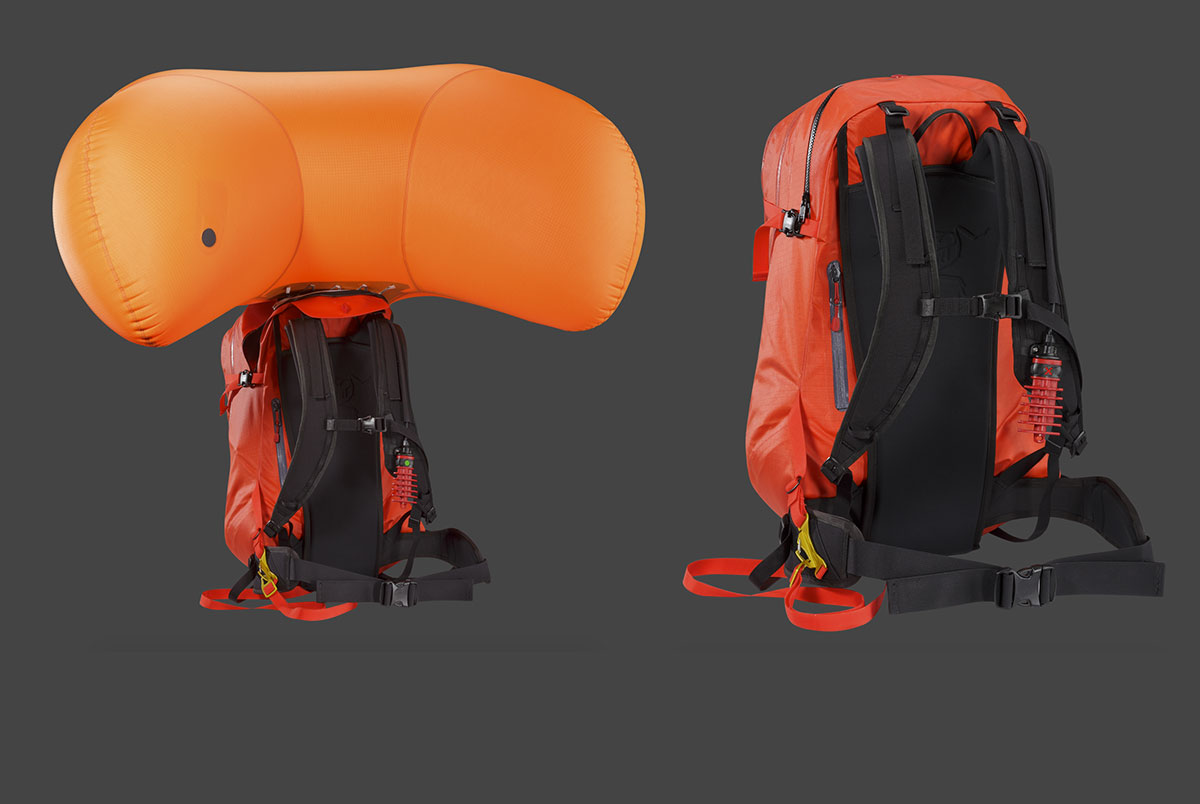
One of the things I find interesting about my job as that I have the opportunity to learn about all sorts of products that I might not ever see in my real life. One such product is the avalanche airbag. It never occurred to me that such a thing existed, but as soon as I read the words "avalanche" and "airbag" together, the concept made perfect sense. This is the item in question:

It is designed to keep the wearer "afloat" in the event of an avalanche. More information about the product is available here. Basically, it is a backpack that incorporates a sturdy balloon and an electrically powered fan to inflate it. Once inflated, the balloon prevents the wearer from being buried in snow.

In NY N274983, Customs was asked to classify this airbag enhanced backpack. My first thought was, "Oh no, this is going in Heading 4202 as a backpack." To me, that seems to undervalue the safety features. Moreover, none of the exemplars in 4202 have safety features. But, that is a straw man I need not fight, because 4202 was not in play. Rather, the importer suggested classification in Heading 9506.99.60 as sports equipment. Customs disagreed with that and noted that the airbag backpack is neither "requisite" not "essential" to any sporting activity.

Instead, Customs classified it in Heading 6307 as an other made up article of textile.

The thing about this device is that it apparently could be worn by anyone in an avalanche-prone area, whether or not participating in a sport. For example, I can see this being worn by the folks who groom and patrol ski runs, by park rangers, and by scientists doing field work. That makes me wonder whether the manufacturer might be able to modify the design to make it clearly dedicated to a sporting event. Customs did admit that it includes exterior straps designed to carry skis, snowboards, and ice axes. Is that enough to make it a product of 9506? Maybe. A more interesting question might be whether there is a clever design tweak that would make it clear that this is a "sporting" product? I don't know what that might be, but I hope the engineers at Arc'teryx are working on it.

Tariff engineering: It's value-added classification.

Ruling of the Week 2016.12: Avalanche Aribag Ruling of the Week 2016.12: Avalanche Aribag Reviewed by Unknown on May 26, 2016 Rating: 5
ads 728x90 B
Powered by Blogger.