Results for Tech

Digital Border Searches

May 12, 2018
Sometimes, the most interesting customs cases are not litigated at the Court of International Trade. They are in the U.S. district courts and involve important constitutional and administrative law principles not related to duties and penalties. Two of those deserve note here. This post will cover the first.

And, yes, I know there are more routine CIT and CAFC cases to address. Someone [a former government official who, despite this crack, I still like] event recently chastised me for being behind here. I promise you that my self-appointed obligation to the trade community weighs heavily on me. I will try to catch up.

But first is U.S. v. Kolsuz. This case involves CBP's suspicion-less search of a cell phone.

As background, you need to know that the law has been clear for decades that Customs and Border Protection is allowed to search cargo and the personal effects of arriving passengers without a warrant and without even particularized suspicion that they might contain evidence of a crime. In other words, as a general matter, your fourth amendment protections from unreasonable search and seizure do not apply at the border. There are lots of reasons for that. Primarily it relates to the ability of a sovereign nation to control who and what cross its borders (both entering and leaving).

There are a lot of things that are not permitted into the country whether or not it is a crime to import the item. CBP protects the health and safety of the public by interdicting, for example, unsafe consumer products, equipment that does not meet environmental standards, the products of endangered species, and agricultural pests. Every now and then, it finds illegal Mongolian horse meat and genitals. CBP could not do its job if it needed a warrant or even suspicion to check whether an arriving passenger has some contraband. Similarly, there are also many things that may not leave the country without prior approval. By crossing the border, the passenger and cargo become subject to inspection for any reason or no reason whatsoever. But note that if the "inspection" were by a street cop away from the border, it would be a "search" and would require a warrant if not incident to an arrest. Remember that the next time you arrive at the border.

An issue that has been percolating for some time is whether this principle extends to the contents of your digital devices. Can CBP review the contents of a passenger's cell phone or computer? That is a potentially far more personally invasive search than is poking around in the wet bathing suits and uninvited beach sand that is in many carry-on bags arriving with passengers. People have been arguing that a search of data should require grounds beyond simply being at the border. Lately, this argument is getting some traction.

You should note that Kolsuz had previously been stopped for illegally exporting firearm parts, so he was on Customs' radar. In this case, he was at Dulles airport in Virginia attempting to board a flight to Turkey when CBP searched his luggage and found firearm parts. Under the International Traffic in Arms Regulations, the weapons can only be exported with a license, which Kolsuz did not have. After finding the weapons, CBP conducted an on-the-spot manual search of his mobile phone. After that, CBP conducted a more detailed forensic search of his phone. That search produced a report showing his contacts, emails, instant messages, photographs, browsing history, physical locations and other personal information. The full report was almost 900 pages long and took a month to compile using specialized software.

Kolsuz moved to suppress the introduction of evidence taken from the forensic search of his phone. He did not challenge the manual search.

The Fourth Circuit noted that the law has long upheld warrantless and suspicion-less routine border searches. However, the law also requires that enforcement agents have individualized suspicions before conducting "highly invasive," non-routine searches. In the past, this has generally applied to physically, personally invasive searches of, for example, body cavities where the "dignity and privacy" of the person are at stake or searches that destroy or unreasonably damage personal property.

In Kolsuz's favor is a recent U.S. Supreme Court decision called Riley v. California. In Riley, the Supreme Court held that cells phones may only be searched incident to an arrest with a warrant based on probable cause to believe the phone contains evidence of a crime. Riley was not a border search, but it did set a bar for local police indicating that the search of a cell phone is not the same as a pat down intended to protect the arresting officer and preserve evidence.

Kolsuz's first argument was that once the phone was taken from him (for a month) and he was in custody, the rationale for the border search exception dissipated and  warrant became necessary. This makes some sense. To the extent the border search exists to allow the United States to control its borders and interdict incoming or outbound contraband, it has already served its purpose. Subsequent investigation, which involved the detailed search of personal data, should, according to this argument, require a warrant. The Court disagreed and held that because the search began as a border search and involved a transnational crime, it remained connected to the border and the border search exception applies.

The defendant's next argument was that a month-long forensic deep dive into a personal cell phone is "highly invasive" and not the kind of routine search permitted at the border without a warrant. The Court agreed that the forensic search should be considered "non-routine," involving a threat to the dignity and privacy of Kolsuz. The factors the Court found persuasive include:
  • the shear amount of data stored on a modern smart phone, which greatly exceeds what could be hand carried or packed into a car if printed, and 
  • the uniquely personal nature of the data on a smart phone including contacts, email, physical locations and web history.
However, it does not follow that an invasive, non-routine search at the border requires a warrant. This is where things start to fall apart for Kolsuz. The Court noted that even after Riley, there is no binding precedent holding that an invasive forensic search of a cell phone at the border requires a warrant. Rather, the CBP officers involved reasonably relied on the current understanding that a non-routine search may be conducted on the basis of reasonable suspicion. Having previously found firearm parts in his bags, CBP had reasonable and individualized suspicion that Kolsuz's phone might contain evidence of a crime. Thus, the search was permissible.

There are other similar cases making their way through the courts. Eventually, this will end up at the Supreme Court. In the meantime, travelers take note. I have read lots of advice about encryption and burner phones and leaving all sensitive data in the cloud. I'm not going to give legal advice on this. You need to do what is appropriate. If you have concerns, talk to a lawyer.

Traveling lawyers should keep in mind that their phones and other personal devices may contain privileged information that needs special attention if stopped by CBP (or any police agency). Finally, corporate compliance policies should take this into consideration for traveling employees.

Hat tip to Peter Quinter of GrayRobinson.


Digital Border Searches Digital Border Searches Reviewed by Unknown on May 12, 2018 Rating: 5
Welcome to Android & CustomsMobile

November 04, 2017
This is going to be one of my old-school posts mostly about something other than customs law. It is about my history with mobile devices and my current heartache. Deal with it. At the end, I get to a more relevant review of the CustomsMobile app.

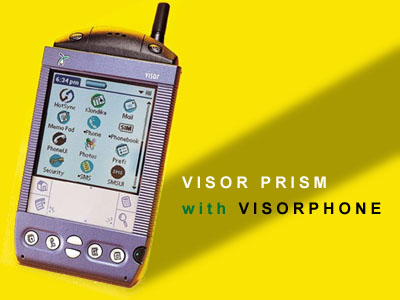
Around 2001, I used something called a Handspring Visor with a VisorPhone attachment. It was basically a Palm Pilot with a slot for extension modules, and its was both functional and cool.


When that stopped being cool, around 2004 I switched over to a Palm Treo 650. That was a great device. It was compact, had a web browser and, if I remember right, would sync with my work email and contacts. That was great until a guy I know doused it in coffee. I wrote about that in 2005. In 2006, I replaced that with a new Treo 700p, which I also wrote about. That post garnered one of my favorite comments ever, from then-New York Times tech columnist David Pogue.

After that, I had brief dalliance with Android in the form of a Motorola Droid A855. One of the original "Droids," that was set by default to loudly say "Droid" as a notification. I actually still have that phone. It is surprising small and heavy. It has a sliding, physical keyboard that is so small I am surprised I ever considered it usable.

Then came Windows Phone 7 on a Samsung Focus. Watch this ad.


I stuck with Windows Phones from then on. I had a terrific Nokia Lumia 920. That was a solidly build, beautifully designed phone that worked exactly as expected with Windows Phone 8 and 8.1. Beyond the main interface and its "live tiles," a unique thing about Windows Phone at that point was that it pulled together lots of feeds into hubs. If I looked at a person in my People Hub, I would see their online activity across Facebook and Twitter, plus emails and text messages. Or, something like that. It has been a while but it worked well.

When Windows Phone 10 became a thing, my 920 would not do the upgrade and I moved on to a Lumia 950. Again, this was a rock solid, if somewhat underwhelming design. For a "flagship" phone, it was surprisingly modest. Still, it worked beautifully and integrated perfectly with all of my work functions. Having Office programs on the phone meant I could easily edit Word and PowerPoint documents on the fly and Outlook had complete access to my contacts and calendar.

I know that by 2015 there were plenty of ways to accomplish all this on an iPhone or Android device, but the simplicity of being in one ecosystem was efficient and appealing. On top of that, I still enjoy the live tiles and the overall user interface. Cortana, the built in virtual assistant is surprisingly helpful, automatically noting things like booked flights and package deliveries. For a while, I was half-jokingly proud to say I was one of the 1% of Americans who understood how a decent mobile device should look and work.

The problem with being a one percenter is that few developers will produce software for your platform. This lead to the so-called app gap between Windows devices and iOS and Android. Overtime, the apps available for my bank, my pharmacy, my airline of choice, and others either disappears or were left orphaned with no new features and no support. Other apps never appeared at all. That is true for paying parking meters, hailing cabs, controlling my internet connected home thermostats, and other basic functions. For the most part, I was able to live without these apps. Much of the functionality of the apps can be accomplished through the company's mobile site, but it is not quite as easy as a single click to launch the app.

Then three things happened almost simultaneously. First, I had to buy a car. The new car includes iOS and Android connectivity and balked at my Windows Phone, calling it an "incompatible" device. I could use the basic Bluetooth compatibility, but I felt somewhat disrespected by my own car. At about the same time, a high-ranking exec at Microsoft went on the record saying that the continued development of new features for what is now called Windows Mobile is not a priority for the company. He also said he personally uses an android device to benefit from the availability of apps. A short time later, Microsoft announced that it would end its Groove music streaming service (though not the player software). I don't actually use the streaming service, but this seemed like a further retreat from mobile.

At that point, I was done. Today, I am carrying an LG V30 Android phone. For the most part, I dislike the user interface tremendously. I find that that it takes more swipes and presses to accomplish some tasks. But, I have loaded the Microsoft Launcher and all the Microsoft applications to get most of the same level of integration with my work systems. I linked my phone to the new Fall Creators Update version of Window, giving me notifications on my PC. So that is good. I also now have full compatibility with my car and a second app to manage charging (it's a plugin hybrid). And, I have regained access to the formerly missing apps including tickets for my commuter rail so that I may no longer be the last guy on board with a paper ticket. I guess that is good.

I still miss my 950. Cortana, the Windows virtual assistant, is available on Android but requires more steps to activate, which is too bad. I wish Microsoft had been able to create a third ecosystem in consumer mobile devices. It appears that its current plan is to try to coopt Android as much as possible, which I guess is a good business play.

Which brings me to CustomsMobile, which my Android phone now has installed as an app. If you are a customs lawyer or compliance pro, this is an extremely useful app. The app is basically an information aggregator that puts key customs information on your phone.

For me, the key components are likely to be rulings and the HTSUS. Rulings are up to date and searchable. The app also has several "canned searches," for frequently searched topics such as "responsible supervision" and "NAFTA." Search results can be sorted by relevance or date. The HTSUS is set out by Section and Chapter for easy navigation. It is also searchable. Once in the text, the tariff numbers are links to a rulings search for that provision. That functionality should be familiar to anyone who uses CROSS. The General Rules of Interpretation, along with all the General Notes, are included. One nice value added feature is that the General Notes are given titles, meaning you do not need to remember that General Note 12 is NAFTA and General Note 4 is GSP, for example.

CustomsMobile also contains features that might be of particular interest to lawyers, and not just customs lawyers. Specifically, it has the entirely of the U.S. Code, not just Title 19, and the full Code of Federal Regulations. Once in a search, users can expand or contract the scope from just Title 19 to all titles or particular chapters. For example, a search for "bonds" in CFR Title 19 produces 425 results. Limiting that to Chapter 1, covering CBP, produces 261 results. Limiting that further to Part 133 gets me to the seven relevant provisions for bonds relating to alleged intellectual property violations. Search options include boolean operators, wild cards, word proximity and other useful features. Lawyers who use Lexis or Westlaw will be familiar with these forms of search syntax.

Other info included in CustomsMobile is port contact information, arranged by state and searchable CSMS administrative messages. These are handy and are probably very useful for brokers and compliance professionals. The last chunk of data Customs Mobile includes is AD/CVD messages from the CBP database. These are good to have access to, but do not serve the function that most people want. What would be super useful is a table of deposit rates by order. Right now, you need to go back through Federal Register notices and ADD/CVD messages to try to find rates. I believe, but don't know for certain, that the rates are available in ACE or ABI. After all, brokers must be able to identify that to complete the entry process.

Another source CustomsMobile might consider porting over to the app is the CBP IPR database. This is a searchable database of trademarks and copyrights recorded with Customs for border enforcement. This is handy for anyone looking to make a deal to import branded products from unauthorized sellers overseas.

Does CustomsMobile make me happy that I am now carrying an Android device? No. Does it lessen the pain? Absolutely. It is a valuable tool for quick reference when away from my main computer and that can be a valuable tool. Given that it is free, CustomsMobile belongs on every customs compliance professional's phone.

[Editorial Note: I am aware that blogs sometimes endorse products without disclosing that the blog received promotional consideration. Just to be clear, CustomsMobile did not know I was posting this and did not pay me in any way. Also, just to be clear, I am not opposed to monetizing the blog.]


Welcome to Android & CustomsMobile Welcome to Android & CustomsMobile Reviewed by Unknown on November 04, 2017 Rating: 5

Ruling of the Week: Shark Tank and Customs

October 15, 2017
I never make an effort to watch Shark Tank. However, for some reason I am always running across it. I always get sucked in. I think the discussions of business valuation and strategy are interesting. I am certain they are very distilled through the editing process, but hearing successful investors critique an entrepreneur's pitch is fascinating to me.

Not long ago, I saw a guy pitch an iPhone case that has a monochrome screen affixed to the back. Using its own battery and Bluetooth connection to the phone, the second screen continuously displays updates, pictures, and other data.

The device is called a popSlate (review)

.

How would you classify that?

It turns out, not as a radio transmitter/receiver of 8517, which is where CBP previously classified smart watches that use Bluetooth to get updates from the phone. In this case, CBP held that the screen provides the essential character. As such, Customs classified it as an other machine or apparatus having individual function in 8543.

I have not spent any time reviewing this classification. It does strike me, though, that this might be described as an indicator panel of 8531. Anyone want to take up the challenge and tell me why that is wrong (or even right)?
Ruling of the Week: Shark Tank and Customs Ruling of the Week: Shark Tank and Customs Reviewed by Unknown on October 15, 2017 Rating: 5

Ruling of the Week 2017.6: Printers vs. Printing Machines

February 24, 2017
This one will be quick, for lots of reasons. Mostly, I don’t have much to add to the ruling other than a question. The ruling at issue is HQ H128416 (Feb. 9, 2017). It involves the tariff classification of digital wide-format ink-jet printer used to print and cut vinyl graphics for outdoor advertising and similar applications.

The printer is a combination of a printing machine and a cutting machine. As such, the competing tariff provisions are in Heading 8443 (Printing machinery) and 8477 (Machinery for working rubber or plastic). That is the sole question addressed in the ruling.


To resolve the classification, Customs and Border Protection applied Note 3 to Section XVI of the HTSUS, which states in relevant part:

Unless the context otherwise requires, composite machines consisting of two or more machines fitted together to form a whole and other machines designed for the purpose of performing two or more complementary or alternative functions are to be classified as if consisting only of that component or as being that machine which performs the principal function.

According to the importer, the principal function is printing, making the machine an article of 8433. Customs agreed, finding that the machine would not be used solely for cutting but that it might be used for printing without cutting. Customs examined the factors set out in United States v. Carborundum Co., 63 C.C.P.A 98, 536 F.2d 373 (1976), including physical characteristics, channels of trade, expectation of the ultimate purchaser, and recognition in the trade to ultimately agree that this machine is primarily a printer.

OK, so here’s my question: Why not consider this to be an 8471 unit of an automatic data processing machine? In other words, why is this ink-jet printer different than the ink-jet printer on my desk? The difference between 8471 printers and 8443 printing machines was discussed at length by the Court of International Trade in Xerox, which we reviewed here. The ruling states that these are “digital” printers. That means that they function in conjunction with a computer to translate digital data into signals to the printer. The only difference is that they print on large format plastic rather than on paper and they can cut the plastic. Once we determine that printing is the principal function, it seems to me that the cutting becomes irrelevant. What we know from Xerox is that large scale digital printing is still a data processing function. That would make these printers units of ADP machines of Heading 8471.


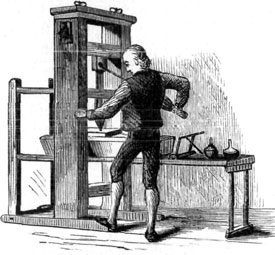
I am probably wrong for some factual reason not stated in the ruling. Heck, I may be wrong on the legal analysis. My analysis ends up with the potentially absurd result that all digital printers are ADP machines and 8443 printing machines would cover only Gutenberg-style presses and similar analog machines. It would be nice to know whether this was discussed and how it was decided that 8471 is not relevant.
Ruling of the Week 2017.6: Printers vs. Printing Machines Ruling of the Week 2017.6: Printers vs. Printing Machines Reviewed by Unknown on February 24, 2017 Rating: 5

Ruling of the Week 2016.21: Holy HoloLens!

November 02, 2016
Over the years, I have opined on the tariff classification of a number of gizmos that I think are probably computers. Often, Customs and Border Protection disagreed with me. Usually, this has to do with whether the particular item is "freely programmable" as opposed to having a specific and limited function. For example, here is a discussion on big industrial digital printers. Here is another on a music editing system and another on a smart watch. I also previously admitted to being a middle-aged Microsoft fanboy. So, this next post is right in my wheelhouse.

If you are not familiar with Microsoft's HoloLens, watch this video.


The imported merchandise is the Microsoft HoloLens and its associated "clicker" controller. HoloLens is a computer [spoiler]. It has a 32-bit processor, 2 GB RAM, 64 GB storage, a graphics processor, and Wi-Fi connectivity. Most important for our purposes, it runs Windows 10 and supports applications written for that environment. What distinguishes HoloLens from your laptop is that it sits on your head, includes sensors to track your position, and places three-dimensional stereo displays before your eyes. The result is that the user can be completely immersed in a virtual world or, perhaps even more exciting, in an augmented version of reality.

I can imagine an entirely feasible scenario of basic law office productivity using HoloLens. In that world, I sit at my desk or walk about my office with Word documents and Excel spreadsheets virtually pinned to my walls until I want them. I might have a 3-D virtual model of a client's product siting on my desk. The old practice of staring into a two-dimensional monitor that sits in a fixed location will be replaced by having the data you want, everywhere you want it. HoloLens and a Bluetooth keyboard for text entry might be the ultimate set up. With cellular connectivity, the headset could replace my main laptop, my tablet, my XBox, and my phone.

Don't get me wrong. I don't expect everyone in a law firm or other enterprise to spend the entire day in a HoloLens headset. I have not been in one, but I doubt they are that comfortable. I am just waxing poetic about the possibilities, not the practical realities. I leave that to those of you who have actual access to a HoloLens (or similar device). [Side note, T-Mobile recently announced it will be selling an Alcatel IDOL Windows Phone with VR goggles, which may be the entry way to VR for many of us.] I view HoloLens as the promise of something between the current headset design and the form factor of Google Glass. That is all the functionality of your phone and PC without ever reaching for a physical device.

So, what about the ruling? Oh, that. It is N273804 (Apr. 7, 2016). Customs noted that the primary function of the HoloLens is data processing. It is a general purpose device that allows users to access multiple applications, of their choosing, including mundane tasks like word processing and spreadsheets. Customs, therefore, had no problem concluding that it is a freely programmable automatic data processing machine. Customs classified it in 8471.41.0150, which is entirely correct.


Ruling of the Week 2016.21: Holy HoloLens! Ruling of the Week 2016.21: Holy HoloLens! Reviewed by Unknown on November 02, 2016 Rating: 5

Breaking News: Otter Products is Still Correct

August 24, 2016
You may know that one of the more closely watched appeals has been Otter Products, LLC v. United States in which the Court of International Trade previously overturned the tariff classification Customs and Border Protection assigned to covers for mobile devices. My original post on the case is here.

Customs classified the covers in HTSUS Heading 4202, which includes, among a large number of other things, suitcases, camera case, backpacks, and similar contains. The Court of International Trade held that mobile device covers are not "similar" to the exemplars listed in the heading and, therefore, could not be classified there. The principle reason supporting that conclusion was that none of the exemplars allow the user complete and functional access to the contents while in the container. To put it in colorful terms: I can't wear my socks when they are in a closed suitcase but I can use my device when it is in the OtterBox Commuter and Defender cases at issue. The alternative is to classify these products as "other articles of plastic" in Heading 3926. The applicable rates of duty are 20% for tariff item 4202.99.00 versus 5.3% for tariff item 3926.99.90.

The Federal Circuit has now affirmed. The decision is, in my opinion, close to perfect.

Looking to the legal text, the Court noted Chapter 39, Note 2(m), which states that Chapter 39 does not cover trunks, suitcases, handbags, and other containers of Heading 4202. That means that if the device covers are properly classified in 4202, they cannot be classified in 3926.

To fall within 4202, the covers must be "similar containers," meaning similar to trunks, suitcases, and other listed containers. To be fair, some of the listed containers are kinda, sorta similar to device cases including spectacle cases, tobacco pouches, and beverage bags. When trying to decide whether something is similar to the listed containers, the Court considers "the unifying characteristics" of the listed products and determined whether the imported item shares those characteristics and does not possess a "more specific primary purpose that is inconsistent with the listed exemplars." A number of prior decisions have identified the unifying characteristics of Heading 4202 as being the ability and purpose of "organizing, storing, protecting, and carrying various items."

Right out of the blocks [Metaphor alert: I must have recently watch too many hours of Olympic track.], the Federal Circuit determined that mobile device cases that provide continual, useful access to the enclosed device are not "containers" at all, let alone "similar containers." The point here is that the common definition of "container" includes examples of items such as boxes, crates, cans, and jars, all of which usually require some minimal effort on the part of the user to get to the enclosed item. The Court of International Trade noted that the device covers at issue, on the contrary, are designed to let the user get to and manipulate the device without opening the cover or removing the device. It is, however, easy enough to envision an open box, for example, permitting access and use of the enclosed item. Consequently, while important, neither the Federal Circuit nor the CIT ended its analysis with this point.

Next, the Court noted that the Commuter and Defender covers are not "similar" to the listed exemplars. Here, the real question was whether the test for "similar containers" required the container to have all four of the unifying characteristics or whether any one is enough. This was an open question and, in my view, a false dichotomy. The answer need not be one or the other in all cases. As the Federal Circuit eventually found, the proper analysis takes all the factors into consideration but applies them in the context of both the item to be classified and the text of Heading 4202. According to the decision:

We take this opportunity to clarify that there is no requirement that the subject merchandise meet all four characteristics to qualify as a “similar container” under Heading 4202.  Courts should consider the four characteristics collectively and then determine whether, in light of those considerations, the classification would lead to an inconsistency.  If, for example, an item met only one of the four characteristics, it almost certainly would not qualify as a “similar container” under Heading 4202.  Allowing a single factor to satisfy the inquiry would, in almost all conceivable scenarios, render the scope of “similar containers” so broad that it would lead to absurd results and make consistent application of the standard all but impossible.

Turning to those individual characteristics, the Federal Circuit first looked at whether the covers organize the devices. They do not. A phone on the table or in my pocket is just as organized as a phone in a case on a table or in my pocket.

Looking to "storage," the Court held that because the devices remain fully accessible and useable, the covers are not "storage" containers.

It was undisputed that the covers protect the devices.

Finally, the covers do not facilitate carrying the devices. The Court observed that, if anything, the device carries the case. Furthermore, when it comes to carrying the device, there is little difference between carrying the naked device and one in a cover. Thus, the covers do not "carry" the device.

The examination of the four factors did not end the analysis. The government argued that the CIT imposed an additional fifth factor that the item must be removed from use while in the container. The Federal Circuit disagreed. This was not a new factor. Rather, it was a recognition that the digital device covers have a characteristic and purpose that is inconsistent with the examples in 4202. That characteristic is that the enclosed device remains fully useable. That was not an error on the part of the CIT.

This is a really good decision, and not just for Otter Products. There are many importers with pending protests or summonses waiting for this decision. They should all be very happy. Moreover, this is an important decision because the Federal Circuit did not get tripped up by trying to create a simple black and white test composed of all four factors or of any one factor. Instead, the Court took a thoughtful approach to both interpreting Heading 4202 and applying that interpretation to the specific products at issue. It is possible to imagine a variety of mobile device covers that should properly stay in Heading 4202. They might have some sort of handle or a cover that needs to flip open to use the phone. By focusing on the particular items at issue, and recognizing that it is was not necessary to make one hard and fast rule for all possibilities, the Court avoided future problems and added clarity to the law.

Taking all of that into consideration, the Federal Circuit found the device covers to be classifiable in 3926 and affirmed the Court of International Trade.

A win is a win. A win that makes good law is even better. Congratulations to all involved. [Go ahead, click the link.]
Breaking News: Otter Products is Still Correct Breaking News: Otter Products is Still Correct Reviewed by Unknown on August 24, 2016 Rating: 5

Krill Oil, Cryptozoology, and Tariff Classification

March 30, 2016
Podcasts are a terrible thing if you expect to do work or read books while otherwise leading a productive life. Among the many I listen to somewhat regularly is Tetrapod Zoology, from which I learn all kinds of thing about both real and fanciful zoology. It's worth a listen, though it may be a bit of an acquired taste. I came to it through the side door. Co-host Darren Naish is an actual, credentialed scientist who is willing to talk about allegedly unidentified megafauna (e.g., the Loch Ness Monster, Yeti, and Bigfoot), not because they exist but because the notion that they might is entertaining. He and his co-host John Conway are fully comfortable trying to imagine how something as absurd as the Mongolian Death Worm might exist in the real world (because it does not).

Why I am on about this? Because I have been wracking by brain trying to think of puns involving krill and the baleen whales that eat them.

It turns out that people eat krill oil as a dietary supplement, which makes us share at least one thing with baleen whales. In Jedwards International, Inc. v. United States, the question presented to the U.S. Court of International Trade was the proper tariff classification of krill oil. The importer classified the merchandise in 1603.00.90 as "extract and juices of meat, fish or crustaceans . . . ." other than clam juice. This seems like a perfectly good description of the product, which, by the time it gets imported, contains nothing but natural components of the krill and a residual amount of ethanol from the production process. U.S. Customs and Border Protection disagreed and classified the merchandise in 3824.90.40 as a product of the chemical or allied industries, including several miscellaneous chemical products and preparation. To complicate matters, in Court, the plaintiff argued that the correct classification is as an animal fat or oil of Heading 1506 or 1517.

The Court easily eliminated Heading 3824, which is a basket provision for chemical products not elsewhere specified. Since the krill oil is described by at least one other heading, 3824 cannot apply.

To be classified in Chapter 15, the krill oil must be an "animal oil." This is where my limited knowledge of zoology might come in handy. I know, via Wikipedia, that krill are subject to the following taxonomical breakdown:

Kingdom:
Animalia
Phylum:
Arthropoda
Subphylum:
Crustacea
Class:
Malacostraca
Superorder:
Eucarida
Order:
Euphausiacea

From Wikipedia

I also know that creatures in the kingdom Animalia are, by definition, animals. So, this should not be an issue as far as science and the English language is concerned.

But, this is tariff classification we are discussing. In the tariff, an animal oil is defined as "esters of glycerol with fatty acids (such as palmitic, stearic and oleic acids)." This definition is apparently fairly consistent in the literature. The kind of fatty acid found in animal fats is chiefly of triglycerides and small amount of other stuff including free fatty acids.

It turns out that the krill oil is low in triglycerides (23%) and is mostly phospholipids (53%). Since the triglycerides do not predominate, krill oil is not animal oil, at least not according to the Court of International Trade. Despite the product being known commercially as an "oil." Advertising and marketing is evidence to be considered, but does not determine tariff classification.

Having excluded Heading 3824 and Chapter 15, the Court classified the merchandise in 1603.00.90 as an extract of crustaceans. Yummy.

This is one of those cases I tend to find frustrating. The Court relies heavily on the Explanatory Notes for a definition of "animal oils" as esters of glycerol, etc. But the term "animal oil" is not defined in the actual Harmonized Tariff Schedule. That means the Court has added a limitation to the scope of the term "animal oil" by relying, in part, on the Explanatory Notes. In this case, the Court noted that this limitation is consistent with scientific and other lexicographical sources. Consequently, I don't think there is a real problem here.

But, on principle, the Explanatory Notes, in my view, should not be elevated to nearly statutory authority unless there is some ambiguity and the available sources of common and commercial meaning have been exhausted. I HATE the fact that the Explanatory Notes are not available for free to the trade community. If the United States Government expects importers to always consult the Explanatory Notes, they should be available to importers just like the regulations, the tariff, and CBP rulings: free. I know that is not the majority view of the Explanatory Notes. Nevertheless, I think we should consult to the Explanatory Notes less often and with less deference, at least until they are made freely available.


Krill Oil, Cryptozoology, and Tariff Classification Krill Oil, Cryptozoology, and Tariff Classification Reviewed by Unknown on March 30, 2016 Rating: 5

Ruling of the Week 2016.7: Microsoft Band

March 08, 2016
First things first, I admit that I am in the tank for Microsoft products. I have multiple Windows 10 computers and a Windows 10 tablet. I am also on my third Windows Phone. I stared with a Samsung Windows 7 device, moved to a Nokia Lumia 920, and now carry a Lumia 950, which I keep slightly ahead of the curve through the Insiders program. I recently got my hands briefly on a Surface Book, on which I have a serious crush. I also have most of my personal data in the Microsoft cloud via OneDrive and Office 365. I am, as you can see, all in on Windows. Nevertheless, I do not have a Microsoft Band fitness tracker.


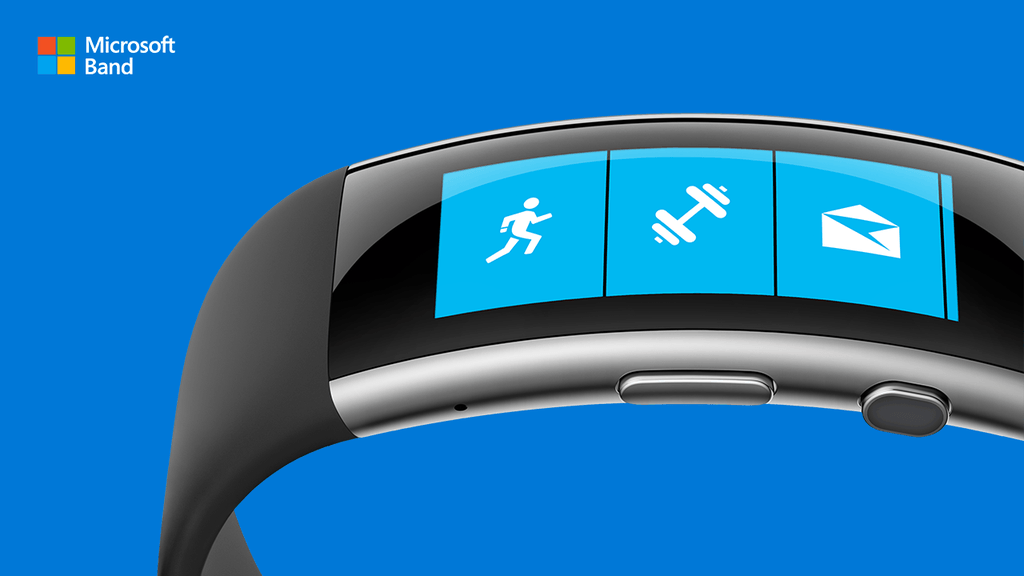
Before we discuss why I have so far skipped the Microsoft Band, we should talk about its tariff classification. I raise this because Customs recently ruled on the question. According to HQ H265035 (Jan. 19, 2016), the Microsoft Band is classified in subheading 8517.62.00, HTSUS, as an apparatus for the transmission or reception of voice, images, or data . . . ." This is a good result for Microsoft because the duty rate is free. I have no intention of trying to muck that up here. Also, the analysis is entirely consistent with Customs' prior decision on a Samsung smart watch, which we analyzed here.

In a nutshell, Customs stated that the Band is a device comprised of multiple electronic components including a display, sensors for heartrate and acceleration, a GPS receiver, a Bluetooth transceiver, and a wrist watch. Given that no one HTSUS heading describes the product, Customs determined the proper classification under General Rule of Interpretation 3(b) based on the one component that imparts the essential character. Customs then found that the Bluetooth connectivity to a paired mobile phone enables many of the Band's functions. Unpaired, the Band has limited utility. Consequently, the Bluetooth transceiver imparts the essential character.

My minor complaints about the analysis remain minor and are well explained in the smart watch post. I will leave it at that.

That brings me back to why I do not yet own a Microsoft Band. The reason is that I currently own a relatively old but perfectly functional Polar C300 cycling watch. The watch uses a chest strap heart rate sensor and on-bike speed and cadence sensors to capture data. The Band would add GPS ride data, which would be great, but I can get that with a phone app and would lose cadence. Also, I have read that the Band's heart rate sensor records data less frequently than does the Polar HRM.

Here is what I want. Microsoft, if you could do me this favor, I would run out and buy a Band. Please add on-bike sensors to capture cadence and possibly a chest-strap for better heart rate data. The Band has Bluetooth, so wireless sensors should be possible. Then, I would gain GPS tracking, all the great connectivity features of the Band and not lose any cycling data. The alternative of a new Polar V800 seems a little excessive given that my current watch is working perfectly. Still, my birthday is coming up, so keep that in mind.


Ruling of the Week 2016.7: Microsoft Band Ruling of the Week 2016.7: Microsoft Band Reviewed by Unknown on March 08, 2016 Rating: 5
ads 728x90 B
Powered by Blogger.